
For many patients, deciding they want better vision is easy.
The part that makes them nervous is everything that comes next.
What does LASIK actually feel like? How long does it take? Will it hurt? What will I see during surgery? And how quickly will I be able to see afterward?
Knowing what to expect can make the entire process much less intimidating.
At Wright Eye Center, LASIK starts well before the day of surgery. We first determine whether LASIK is the right procedure for your eyes, perform detailed measurements to plan your treatment, and make sure you understand what to expect during recovery.
Here’s what the process generally looks like.
Step 1: Start With a Complimentary LASIK Consultation
Before worrying about surgery, the first question is whether you’re actually a good candidate.
At Wright Eye Center, we start with a complimentary LASIK consultation.
During this visit, we’ll discuss your prescription, eye health, lifestyle and vision goals and perform preliminary testing to determine whether you appear to be a good candidate for laser vision correction.
LASIK isn’t right for everyone.
Depending on your eyes, we may recommend LASIK, PRK, EVO ICL or another option.
And sometimes the best recommendation is simply not to have surgery.
The purpose of this first visit is to help you understand your options before committing to the next step.
Step 2: Your Comprehensive LASIK Evaluation
If you appear to be a good candidate and decide you’d like to move forward, we’ll schedule a more comprehensive LASIK evaluation.
This appointment involves significantly more detailed testing and measurements.
We evaluate factors such as:
- Your exact prescription
- Prescription stability
- Corneal thickness
- Corneal shape
- Corneal health
- Tear film and ocular surface
- Overall eye health
- Your visual goals
Advanced corneal imaging is particularly important.
Two patients can have almost identical glasses prescriptions but very different corneal measurements. Those differences can affect whether we recommend LASIK, PRK or another procedure.
Because this evaluation requires specialized testing, technology and physician time, there is a separate evaluation fee.
What About Contact Lenses Before Your Evaluation?
Contact lenses can temporarily alter the shape of the cornea.
Because accurate corneal measurements are essential when planning laser vision correction, you’ll be given instructions about when to discontinue your contact lenses before your evaluation.
The amount of time may vary depending on the type of contact lenses you wear.
Following these instructions helps us obtain the most accurate measurements possible.
Preparing for LASIK Surgery
Once we’ve confirmed that you’re a good candidate and you’ve decided to proceed, we’ll give you specific instructions for surgery day.
These may include guidance about:
- Eye medications
- Contact lens wear
- Makeup and facial products
- Transportation
- What to bring with you
- Your postoperative medications and instructions
You’ll need someone to drive you home after surgery.
Your postoperative eye drops are included as part of your LASIK care, so you don’t need to worry about adding a separate medication expense to the procedure.
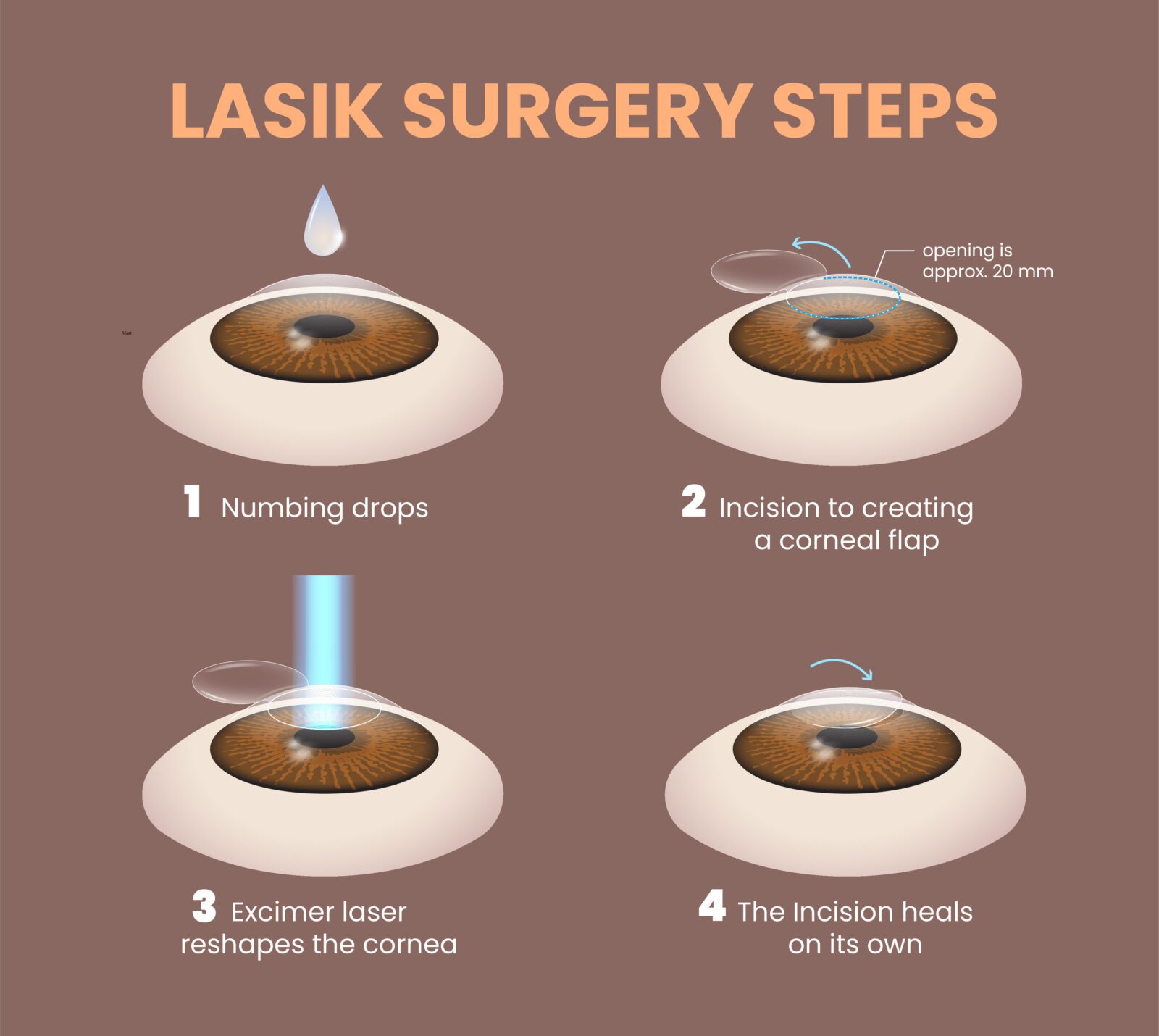
What Happens During LASIK?
LASIK itself is surprisingly quick.
When you enter the laser suite, we’ll get you positioned comfortably and review what’s going to happen.
Numbing eye drops are used, so there are no injections around the eye.
An instrument gently keeps your eyelids open so you don’t have to worry about blinking.
One of the most common things patients tell us before surgery is:
“I’m afraid I’m going to blink or move my eye.”
You don’t need to worry about either.
The equipment and surgical process are specifically designed to account for normal eye movement, and we’ll guide you through each step.
Does LASIK Hurt?
Most patients describe LASIK as unusual rather than painful.
You may feel pressure during part of the procedure, but the eye is numbed with anesthetic drops.
The laser treatment itself usually takes only a short amount of time.
We’ll talk you through what’s happening throughout the procedure so you know what to expect.
What Will I See During LASIK?
You won’t be watching the surgery happen.
You may notice lights, changes in brightness, blurry vision or other visual sensations during different parts of the procedure.
At certain moments, your vision may become very dim or temporarily disappear.
This can sound alarming when you read about it beforehand, but it’s expected and brief.
Knowing that ahead of time makes it much less surprising when it happens.
What Happens Immediately After LASIK?
Your vision will usually be blurry immediately after surgery.
Many patients describe it as looking through fog or a steamy window.
Your eyes may also:
- Water
- Burn
- Feel irritated
- Feel gritty
- Be sensitive to light
These symptoms are generally most noticeable during the first several hours.
For most patients, the best thing to do after getting home is simple:
Rest your eyes and sleep if you can.
By the time many patients wake up later that day or the following morning, their vision is already significantly clearer.
The Morning After LASIK
This is often the exciting part.
Many patients wake up the morning after LASIK and can immediately see things they previously couldn’t see without glasses or contacts.
Vision isn’t necessarily perfect yet.
You may still notice:
- Mild blur
- Fluctuating vision
- Dryness
- Halos around lights
- Glare
- Light sensitivity
These symptoms typically improve as the eyes heal.
We’ll examine your eyes after surgery to make sure everything is healing appropriately.
When Can I Go Back to Work?
Many patients return to work relatively quickly after LASIK, depending on their occupation and how their eyes are feeling.
Someone who works at a computer may return sooner than someone whose job involves dust, debris, physical contact or environments that could expose the eyes to injury.
We’ll provide recommendations based on your individual situation.
When Can I Exercise Again?
One of the most common questions we hear in Colorado is:
“When can I get back to working out, hiking, skiing or biking?”
Most patients can return to many normal activities relatively quickly, but certain activities require more caution during the early healing period.
Swimming, hot tubs, dusty environments and activities with a higher risk of something striking the eye generally require additional precautions.
We’ll give you specific instructions based on the activities you enjoy.
What About Dry Eye?
Temporary dryness is common after LASIK.
Even patients who didn’t consider themselves to have dry eye before surgery may notice:
- Burning
- Grittiness
- Fluctuating vision
- Tired eyes
- Increased awareness of their eyes
Colorado’s dry climate can make these symptoms more noticeable.
That’s one reason we evaluate the ocular surface carefully before surgery.
Treating significant dryness before LASIK and using postoperative drops as directed can help make recovery more comfortable.
What About Halos and Night Vision?
Glare, halos and changes in night vision can occur during the early healing period.
For many patients, these symptoms improve as the eye heals and the visual system adapts.
We discuss night vision before surgery because expectations matter.
Our goal isn’t simply to get you through the procedure. We want you to understand both the benefits and the limitations of laser vision correction before you decide to have it.
How Long Does LASIK Take to Fully Heal?
LASIK has a remarkably fast initial recovery, but that doesn’t mean the eye is completely healed the next morning.
Vision may fluctuate during the early recovery period, particularly with dryness or prolonged computer use.
Your vision generally becomes increasingly stable as healing progresses.
That’s why postoperative visits remain important even when you’re already seeing well.
What If My Vision Isn’t Perfect?
LASIK is extremely precise, but no surgical procedure can guarantee a particular visual result.
Occasionally, a patient’s final prescription may not be exactly what we intended.
If enough residual prescription remains to bother you and your eyes are otherwise appropriate for additional treatment, an enhancement may be considered.
Wright Eye Center maintains an enhancement policy for eligible patients. Because those policies can change over time, we’ll review the current details with you before surgery.
A Surgeon’s Perspective: The Surgery Is Usually the Easy Part
One of the things I tell nervous patients is that the anticipation is often harder than the procedure itself.
LASIK happens quickly, and we’re talking to you throughout the process.
But the most important part of LASIK isn’t how fast the laser works.
It’s everything we do before you enter the laser suite.
Careful patient selection, accurate measurements and choosing the right procedure for the right eye are what allow us to perform refractive surgery confidently.
Sometimes those measurements tell us LASIK is a great option.
Sometimes they lead us toward PRK or EVO ICL.
And occasionally they tell us that surgery isn’t worth the risk.
That’s exactly what a good refractive surgery evaluation is supposed to accomplish.
Frequently Asked Questions About LASIK
Will I be awake during LASIK?
Yes. LASIK is performed while you’re awake. Numbing drops are used to keep the eyes comfortable, and we’ll guide you through the procedure.
What if I blink?
You don’t need to worry about blinking during LASIK. Your eyelids are gently held open during the procedure.
What if I move my eye?
Modern laser systems are designed to monitor eye position during treatment. We’ll also guide you where to look throughout the procedure.
Can I drive myself home?
No. You should arrange for someone to drive you home after LASIK.
How soon will I be able to see?
Most patients notice a significant improvement very quickly, often by the following morning, although vision can fluctuate during healing.
Are my eye drops included?
Yes. The postoperative medications used as part of your LASIK care are included.
How do I know if I’m a candidate?
Start with a complimentary LASIK consultation. We’ll perform preliminary testing and discuss your vision goals to determine whether LASIK—or another vision correction option—may be appropriate.
Ready to Find Out if LASIK Is Right for You?
You don’t have to decide whether you want surgery before coming to see us.
That’s the purpose of the consultation.
At Wright Eye Center, your initial LASIK consultation is complimentary. We’ll evaluate whether you appear to be a candidate, discuss your options and answer your questions without requiring you to commit to surgery.
You can also start from home with our online LASIK and PRK Candidate Quiz:
Take the Candidate Quiz:
https://wrighteye.com/am-i-a-
Whether LASIK, PRK, EVO ICL or another option is ultimately right for you, our goal is to help you understand your choices and make the decision that’s best for your eyes.